
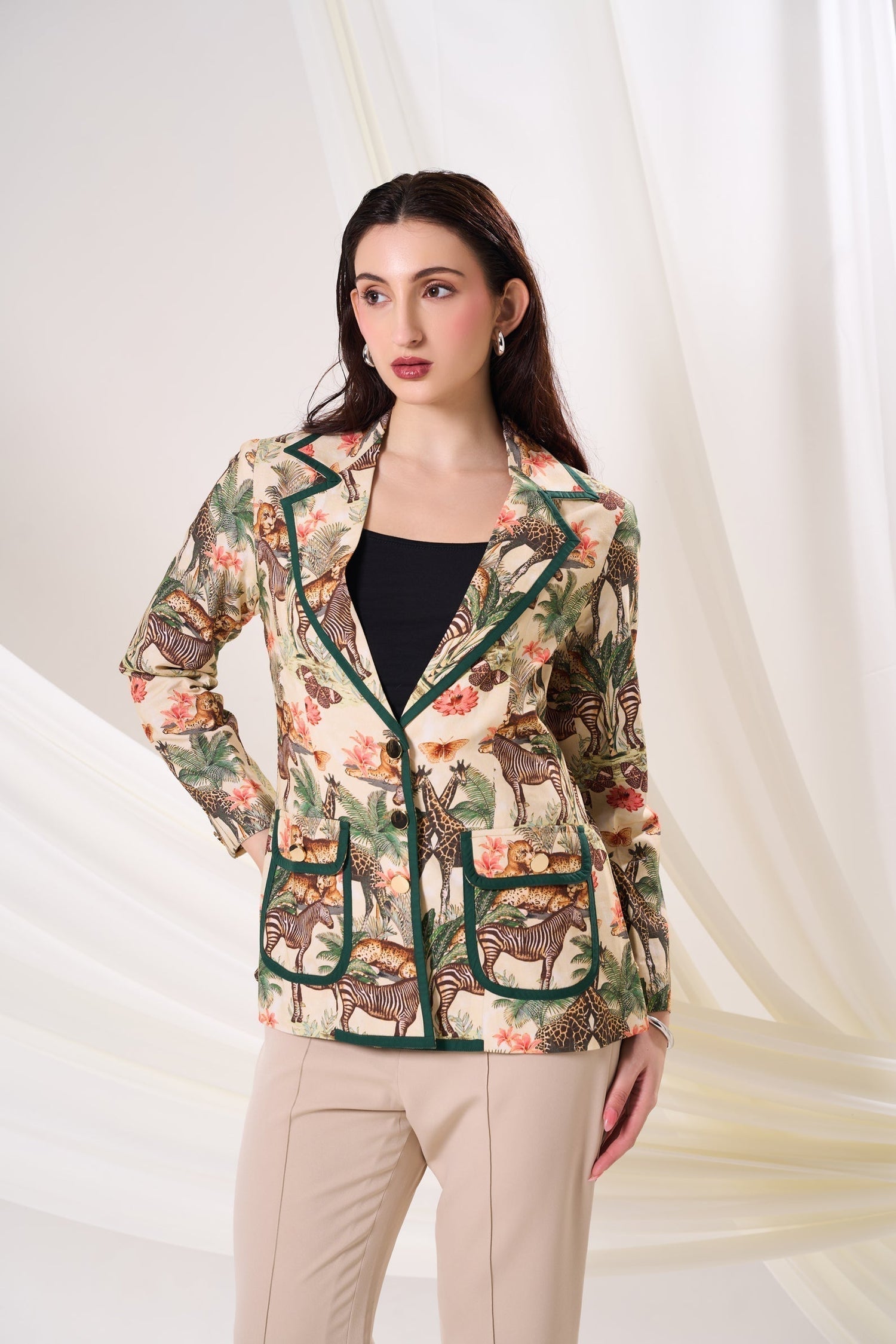
I want to tell you about Meera.
She's 52 years old, lives in a small town in Gujarat, and has been doing hand embroidery since she was fourteen. Her hands know patterns her mind doesn't consciously remember anymore. Flowers bloom under her needle. Vines twist into being. Sequins catch light exactly where they should.
When you buy our BOUQUET embroidered denim jacket, Meera's hands touched it. Her skill shaped it. Her expertise made it beautiful.
And that changes everything.
Most clothes tell no story at all. They were made somewhere by someone under some conditions you'll never know. They arrived in plastic wrapped in more plastic, tagged with a price that reveals nothing about their journey from raw materials to your closet.
There's no connection. No narrative. No relationship between you and the hands that made what you're wearing.
But what if your clothes could tell stories worth hearing?
The Difference Handmade Makes
Let me be clear about something: "handmade" isn't automatically better. Plenty of handmade things are poorly executed. Plenty of machine made things are excellent.
The value of handmade isn't romantic nostalgia. It's specific, tangible advantages you can see and feel.
Human Skill Creates Details Machines Can't
Look closely at machine embroidery versus hand embroidery. The machine version is perfectly uniform. Every stitch identical. Every spacing exact. Technically flawless.
The hand embroidered version is alive. Slight variations prove human hands were involved. The placement responds to the fabric's natural flow. Details adapt to the design instead of rigidly repeating.
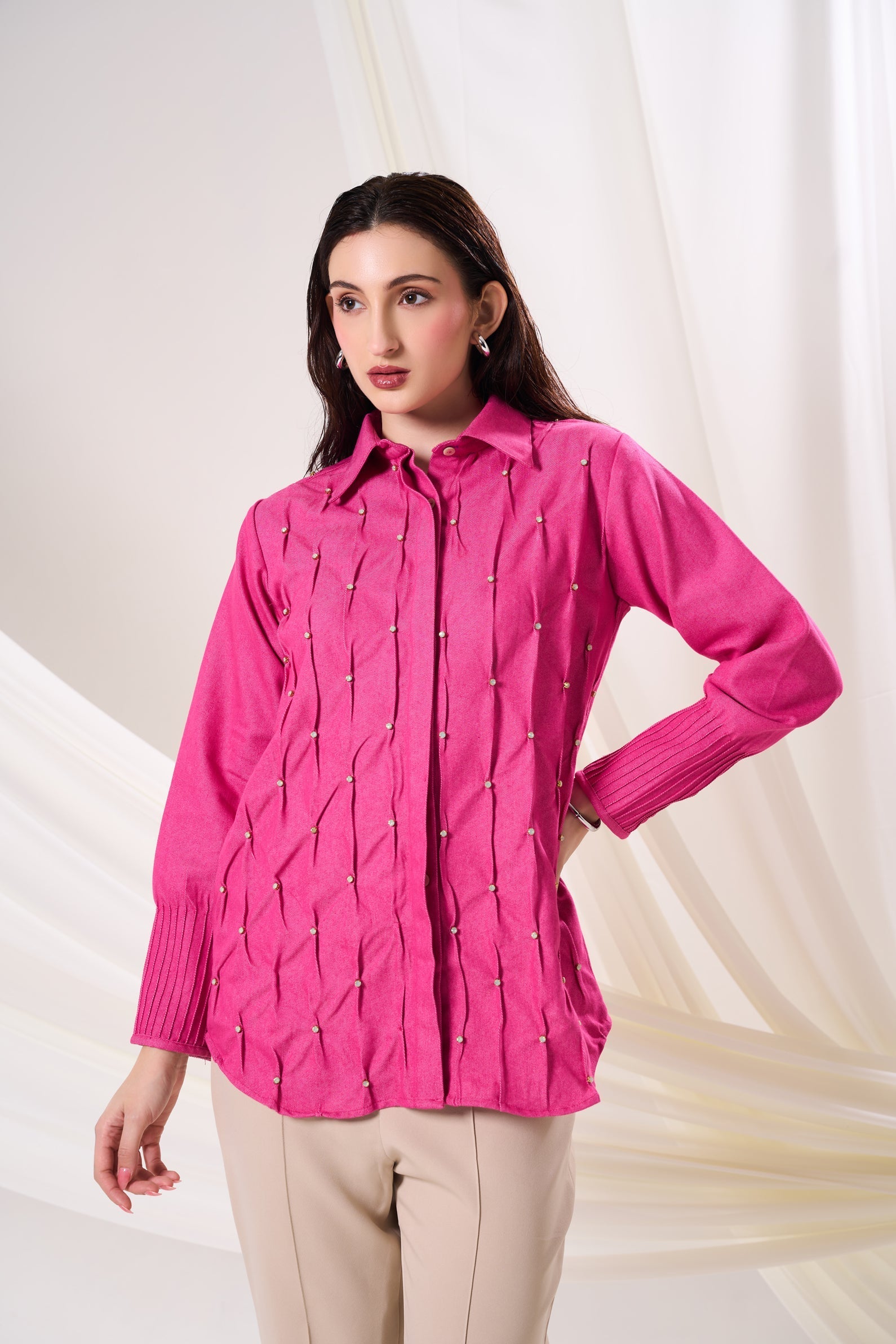
This creates garments that feel considered rather than processed. Every embroidered shirt, every sequined piece, every detailed garment carries evidence of the person who made it.
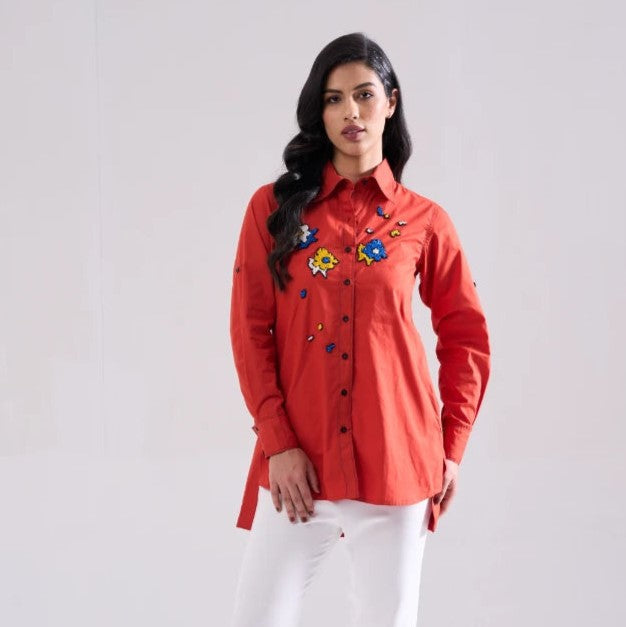
You can see this in our embroidered collection. The flowers don't look stamped. They look grown. The sequin work doesn't look applied by machine. It looks placed by someone who understood exactly where light should catch.
This isn't about imperfection. It's about craftsmanship that machines can't replicate.
Quality Control That Actually Controls Quality
In mass production, quality control means checking random samples from massive batches. Most pieces never get individually inspected. Flaws slip through constantly.
In handmade production, every piece is examined by the person who made it and the people overseeing quality. Because volumes are smaller, standards can be higher.
We reject approximately 12% of pieces during quality control. In fast fashion, rejection rates are kept below 2% because the economics can't support higher rejection. The difference? We prioritize quality. They prioritize volume.
When you receive something from Haus of Handmade, it's been examined multiple times by multiple people who care about what they're sending you. That changes what arrives.
The Truth About Embroidered Clothing
Embroidery is having a genuine moment in Indian fashion right now. But not all embroidery is created equal.
Let me show you what separates embroidered clothing worth owning from embroidered clothing that disappoints.
Thread Quality Determines Longevity
Cheap embroidery uses cheap thread. After a few washes, colors bleed, threads loosen, patterns start looking ratty.
Quality embroidery uses thread selected for colorfastness and durability. The embroidery looks as good after fifty washes as it did on day one.
This isn't visible when you're comparing prices online. It becomes obvious after you've owned the piece for three months. By then, cheap embroidery has already started deteriorating. Quality embroidery still looks new.
Density and Placement Matter Enormously
Amateur embroidery either overfills patterns (making them stiff and uncomfortable) or underfills them (making them look sparse and cheap).
Expert embroidery finds the perfect density. Enough stitching to create visual impact and structural integrity. Not so much that the fabric becomes stiff or heavy.
The placement also separates good from great. Thoughtful embroidery enhances the garment's structure and flow. Thoughtless embroidery fights against it.
Our embroidered pieces are designed with both considerations. The density creates beauty without stiffness. The placement follows the natural lines of the garment, enhancing rather than disrupting its flow.
Washing and Wear Behavior
Here's the test that reveals everything: what happens after twenty washes?
Poor embroidery loses threads, fades, starts pulling at the base fabric. The piece that looked beautiful initially becomes unwearable.
Quality embroidery maintains its integrity. Threads stay secure. Colors remain true. The piece ages gracefully instead of falling apart.
This is why we focus obsessively on construction quality. Because we know you're buying these pieces to wear them repeatedly, not display them unworn.
What Indian Handmade Actually Means
"Handmade in India" can mean almost anything. Let me tell you what it means at Haus of Handmade.
Artisan Partnerships, Not Anonymous Labor
We know the people who make our clothes. Not abstractly. Actually. We know Meera who does embroidery. We know Rahul who handles tailoring. We know Priya who manages quality control.
These aren't anonymous workers somewhere in a supply chain. They're skilled professionals we work with directly and compensate fairly.
When you buy from us, you're supporting specific people with specific skills earning dignified livelihoods. That's not marketing language. That's operational reality.
Traditional Techniques Applied to Contemporary Design
Indian craft traditions are centuries old. Embroidery techniques passed through generations. Fabric treatments refined over decades. Skills developed through years of practice.
Modern handmade fashion takes these traditional techniques and applies them to contemporary silhouettes and designs. You get the benefit of generational expertise in pieces that work for current lifestyles.
Our CONFETTI sequined linen shirt perfectly demonstrates this blend. The sequin work uses traditional techniques. The shirt silhouette is contemporary. The combination honors heritage while serving modern needs.
Made to Order Manufacturing
Here's what makes us different: we don't make inventory hoping you'll buy it. We make your piece after you order it.
This means:
-
Your measurements determine the fit, not standard sizing guesswork
-
No waste from unsold inventory sitting in warehouses
-
Every piece receives individual attention during creation
-
Zero pressure to mark down unsold items (because there aren't any)
Yes, you wait a few weeks for your piece. But you receive something made specifically for you, not pulled from a pile made for anybody.
The Hidden Cost of Fast Fashion Embroidery
Let's talk about those ₹599 embroidered tops flooding online marketplaces.
They're cheap for specific reasons. Understanding those reasons changes how you evaluate price.
Exploitation Somewhere in the Chain
You cannot pay fair wages, use quality materials, maintain ethical practices, and sell embroidered clothing for ₹599. The math doesn't work.
That price point requires exploitation somewhere. Either materials are synthetic garbage. Or workers are paid below living wages. Or environmental standards are ignored. Or quality is deliberately compromised.
There's no ethical shortcut to that price. The cost exists. Someone pays it. Just not the person buying the shirt.
Embellishments That Don't Last
Fast fashion embroidery is designed to look good in product photos and through the first few wears. That's it.
After that? Sequins fall off. Threads loosen. Colors fade. The piece becomes unwearable trash destined for a landfill.
This isn't accidental. It's engineered obsolescence. Make it cheap, make it disposable, make customers buy again soon.
Quality handmade embroidered clothing costs more upfront because it's designed to last years instead of weeks. Over the piece's lifetime, it's actually cheaper. But fast fashion isn't interested in lifetime value. Only transaction frequency.
Environmental Impact You Don't See
Every disposable embroidered top that falls apart after minimal wear becomes textile waste. India generates over 2 million tons of textile waste annually. Much of it from exactly these kinds of disposable pieces.
When you choose quality handmade embroidered clothing that lasts for years, you're reducing your contribution to that waste mountain. Not by being virtuous. Just by buying things that don't become garbage quickly.
What to Look for in Quality Embroidered Pieces
If you're investing in embroidered clothing, here's what separates worth buying from waste of money.
Base Fabric Quality Matters First
The most beautiful embroidery in the world can't save a garbage base fabric. Start by evaluating the fabric itself.
Is it natural fiber or synthetic? Does it breathe? Does it feel pleasant against skin? Is the weight appropriate for the garment type?
If the base fabric is poor, the embroidery is wasted effort.
Our pieces start with carefully selected base fabrics. The embroidery enhances already good fabric. It doesn't compensate for poor fabric quality.
Secure Attachment Methods
Pull gently on a sequin or embroidered element. Does it feel secure? Or does it feel like it might detach easily?
Quality embroidery is attached in ways that withstand normal wear and washing. Poor embroidery is barely hanging on from day one.
This isn't something you see in product photos. It's something you discover by actually handling the piece. Which is why we encourage customers to examine items when they arrive. Quality should be immediately obvious.
Design That Enhances Rather Than Covers
Great embroidery enhances the garment's inherent beauty. Poor embroidery tries to cover up poor construction or design.
If embroidery feels like distraction rather than addition, that's a red flag. The piece probably isn't well made underneath all that decoration.
Look for embroidered pieces where the embroidery serves the overall design rather than dominating it. Where removing the embroidery would leave you with still beautiful clothes. That's when embroidery is doing its job properly.
The Joy of Wearing Stories
Here's what changes when you wear clothes with genuine stories behind them.
Connection to Craftsmanship
When you know that Meera spent twelve hours embroidering your jacket, you treat that jacket differently. Not with museum-level preciousness. But with respect for the labor it represents.
You take care of it. You value it. You appreciate it beyond its function as covering for your body.
This creates a different relationship with your clothes. Less transactional. More meaningful.
Pride in What You Support
Every purchase is a vote for the kind of world you want to live in. When you buy handmade embroidered clothing from artisan partnerships, you're voting for fair wages, skilled labor, traditional crafts, and sustainable practices.
That feels good beyond just looking good.
You're not just wearing a beautiful piece. You're wearing your values. And that confidence shows.
Clothes That Spark Conversations
"Where did you get that?" becomes an opportunity to share a story worth sharing.
Not just "I got it from this brand." But "This was hand embroidered by artisans in Gujarat using traditional techniques. The brand works directly with them and pays fair wages."
That's a conversation worth having. That's a story worth spreading.
Building a Handmade Wardrobe
You don't need a closet full of handmade pieces to benefit from handmade quality. You need strategic investments.
Start With Statement Pieces
Begin with handmade embroidered pieces that elevate everything else in your wardrobe. A stunning embroidered jacket. A beautifully detailed shirt. A special co ord set.
These become the pieces you reach for when you want to feel special. When occasions matter. When first impressions count.
Our embroidered denim jackets serve this exact purpose. They transform ordinary outfits into something memorable. One piece does enormous heavy lifting.
Add Versatile Handmade Basics
Once you have statement pieces, add handmade basics that work across contexts. Quality cotton shirts. Linen pieces. Simple but beautifully made items that form your wardrobe foundation.
These might not have obvious embroidery or decoration. But the quality shows in fit, fabric, construction, and longevity.
Replace Fast Fashion Gradually
You don't need to throw out everything and start over. Just replace fast fashion pieces with quality handmade alternatives as things wear out or you're ready to upgrade.
Over time, your wardrobe gradually shifts from disposable to durable. From anonymous to story-filled. From transaction to connection.
That transition changes not just what you wear but how you feel wearing it.
The Price of Quality
Yes, handmade embroidered clothing costs more than fast fashion alternatives. Let's talk honestly about why that's actually better value.
The Cost Per Wear Reality
A ₹599 embroidered top that falls apart after 10 wears costs ₹59.90 per wear.
A ₹3500 handmade embroidered shirt that lasts 100+ wears costs ₹35 per wear.
The "expensive" piece is actually cheaper. Significantly cheaper. And that's before considering the environmental and ethical costs.
This is why smart shoppers focus on cost per wear, not sticker price. The number that matters is total cost divided by number of wears, not the initial outlay.
Investment That Appreciates
Quality handmade clothing often looks better with age. The fabrics soften. The colors deepen. The piece acquires character.
Fast fashion immediately begins deteriorating. From day one, it's moving toward unwearable.
This means quality handmade pieces appreciate in value (emotionally if not financially) while fast fashion depreciates immediately.
Supporting Systems You Believe In
When you pay fair prices for handmade clothing, you're supporting fair wages, traditional crafts, sustainable practices, and ethical manufacturing.
When you pay basement prices for fast fashion, you're supporting exploitation, environmental destruction, and disposable culture.
Both prices reflect real costs. The question is: which costs are you willing to accept?
Your Handmade Journey
At Haus of Handmade, we're not trying to sell you everything you need forever. We're trying to offer you pieces worth owning for years.
Handmade embroidered clothing that honors the artisans who create it. Quality that justifies investment. Design that serves contemporary life while respecting traditional craft.
Every piece tells a story. The question is: do you want to be part of that story?
Ready to wear clothes with stories worth telling?
Explore our handmade embroidered collection at hausofhandmade.com
Connect with us:
📱 WhatsApp: +91 88001 03552
📧 Email: admin@hausofhandmade.com
📸 Instagram: @haus.of.handmade




Leave a comment
This site is protected by hCaptcha and the hCaptcha Privacy Policy and Terms of Service apply.