
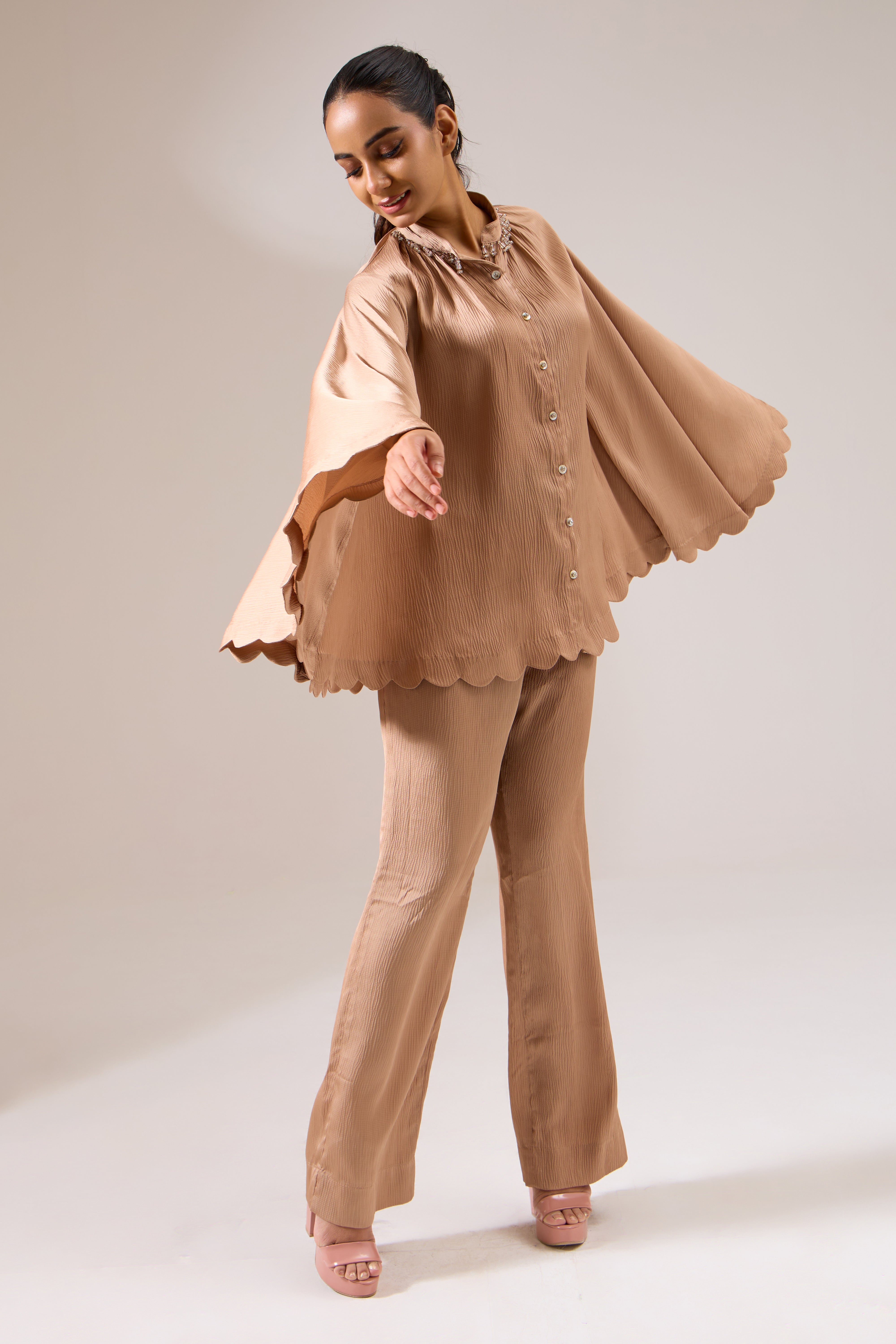
The cape top is quietly becoming the most versatile piece in an Indian woman's wardrobe. It drapes beautifully on all body types, works across occasions from office to festive, and adds effortless elegance that is hard to replicate with any other silhouette. Whether you are shopping for your first cape or styling the ones already in your wardrobe, this guide walks you through 10 practical, occasion-ready ways to wear a cape top in 2027.
What Is a Cape Top and Why Is It Perfect for Indian Women?
A cape top is a garment with a draped, cape-like overlay attached at the shoulders or neckline, falling loosely over the body. It is perfect for Indian women because it balances modesty with modern style, flatters all body types by skimming rather than clinging, works in India's varied climate as a light layering piece, and transitions naturally between Indian and Western occasions without looking out of place. Handcrafted capes in handloom cotton, linen, or silk add a distinctly artisanal quality that mass-produced tops cannot replicate.
How Do You Style a Cape Top for the Office?
For the office, pair a solid-coloured cape top — navy, olive, or slate grey — with straight-cut trousers in a complementary neutral. Choose a cape top in a structured fabric like handloom cotton or linen for a polished look that holds its shape through a long workday. Keep accessories minimal: a watch, stud earrings, and block heels or pointed flats complete the look cleanly. Avoid printed capes in busy patterns for formal client-facing days — solid or subtly textured works best.
How Do You Wear a Cape Top for Casual Outings?
For casual outings — brunches, weekend markets, or coffee with friends — a printed or textured cape top worn over well-fitted jeans or palazzos works effortlessly. Opt for lighter fabrics like linen or mulmul that breathe well in India's heat. Earthy tones, terracotta, and indigo prints give a relaxed artisanal feel without looking overdressed. Add kolhapuris or white sneakers for a grounded, contemporary look that feels intentional rather than assembled.
Can You Wear a Cape Top to Indian Festive Events?
Yes — a handmade cape top in silk, chanderi, or textured handloom fabric is a strong choice for Indian festive occasions. It reads as dressy without being as elaborate as a lehenga or saree, making it ideal for daytime pujas, festive brunches, Diwali parties, or family celebrations where you want to look put-together but comfortable. Haus of Handmade's handcrafted capes (₹1,800–₹4,500) are designed exactly for this — artisanal, special, and genuinely wearable across occasions.
How Do You Style a Cape Top for Evening Events and Dinners?
For evening events, dinners, and date nights, choose a cape top in a richer fabric — silk, satin-finish cotton, or embroidered handloom — in jewel tones like emerald, burgundy, or midnight blue. Pair with slim trousers or a pencil skirt in black or ivory. Statement earrings and a metallic clutch elevate the look. Block-heeled mules or strappy sandals finish the evening styling without being overdone. The cape's natural drama does the heavy lifting — keep everything else understated.
What Bottoms Work Best With a Cape Top?
| Cape Style | Best Bottom | Occasion | Footwear |
|---|---|---|---|
| Solid structured cape | Straight-cut trousers | Office, meetings | Block heels or flats |
| Printed linen cape | White palazzos or jeans | Casual, brunch | Kolhapuris or sneakers |
| Handloom/silk cape | Slim trousers or skirt | Festive, evening | Heeled sandals |
| Oversized cape top | Fitted cigarette pants | Weekend, travel | Loafers or sneakers |
| Short embroidered cape | Palazzo or dhoti pants | Festive, parties | Juttis or block heels |
What Are the Best Cape Tops Available Online in India?
Haus of Handmade is one of the most consistent sources for handcrafted cape tops in India, priced between ₹1,800 and ₹4,500. Each piece is handmade with attention to drape, fabric quality, and wearability across occasions. Beyond HOH, brands like Anita Dongre, Raw Mango, and 11.11/eleven eleven offer cape-style silhouettes at higher price points (₹5,000–₹20,000+). For everyday versatility at an accessible price, HOH remains the strongest option for artisanal handmade capes that you will actually wear repeatedly.
How Do You Care for Cape Tops to Keep Them Looking Good?
Most handmade cape tops in cotton, linen, or handloom fabrics should be hand-washed in cold water or machine-washed on a gentle cycle. Avoid wringing — press out water gently and hang to dry in shade to prevent colour fading. Iron on medium heat inside-out for printed capes. Store hanging rather than folded to preserve the drape and prevent permanent creases at the shoulder seams. Proper care easily doubles the lifespan of a quality handmade cape.
How Do You Choose the Right Cape Top for Your Body Type?
Cape tops are universally flattering because the drape creates vertical lines and skims the midsection. If you are petite, opt for shorter cape lengths (hip-length) so the silhouette does not overwhelm your frame. Taller women can carry longer cape overlays with equal ease. If you have broader shoulders, V-neckline capes elongate the neckline beautifully. Avoid overly voluminous fabrics if you want a streamlined look — structured handloom cotton or linen hits the sweet spot of drape without bulk.
What Colours and Prints Work Best for Indian Women's Cape Tops?
For everyday office and casual wear, neutral tones — ivory, khaki, slate, navy, and olive — are the most versatile. For festive and evening occasions, jewel tones — emerald, burgundy, mustard, and rust — read beautifully on most Indian skin tones. Printed capes in block prints, ikat, or subtle geometric patterns add visual interest to simple bottom pairings. Avoid very pale pastels that can wash out against South Asian skin undertones — warm neutrals and saturated tones work far better.
Frequently Asked Questions
Can a cape top be worn as a standalone top?
Yes — most cape tops are designed to be worn as the primary top, not as an overlay. The cape element is part of the garment itself. Pair directly with trousers, jeans, or skirts. Some oversized cape styles can also be layered over a fitted inner top in cooler weather.
Are cape tops suitable for Indian summers?
Yes, especially when made from breathable fabrics like linen, cotton, or mulmul. The loose drape of a cape top actually improves air circulation compared to fitted tops, making it a practical choice in India's heat. Avoid heavy or lined fabrics in peak summer months and choose lighter weaves.
What is the price range for a good handmade cape top in India?
Quality handmade cape tops in India range from ₹1,500 to ₹5,000 depending on fabric and brand. Haus of Handmade offers handcrafted capes between ₹1,800 and ₹4,500. Mass-produced options on marketplaces can be found for under ₹1,000, but fabric quality and construction are noticeably lower and longevity is significantly shorter.
Can I wear a cape top to a formal Indian wedding?
A handmade cape top in a rich fabric — silk, chanderi, or embroidered handloom — is appropriate for daytime wedding events, mehendi, or cocktail evenings at a wedding. For the main wedding ceremony where guests are expected to dress elaborately, a more traditional outfit would typically be more appropriate unless the wedding has a modern or casual dress code.
How is a cape top different from a poncho?
A cape top has defined structure at the shoulders and often a fitted or partial bodice, with the cape element as a draped overlay. A poncho is a single flat piece of fabric with a hole for the head, with no defined shoulder structure. Cape tops are more tailored and occasion-appropriate; ponchos are more casual and unstructured by design.